
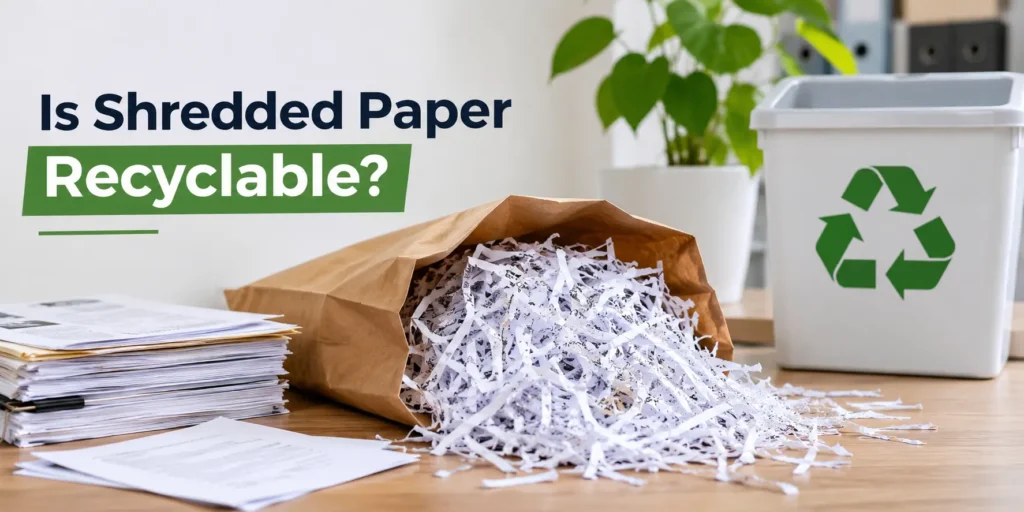
After a big shredding session, you are left with a bag full of tiny paper pieces. You know paper is recyclable, but what about these small scraps? Is shredded paper recyclable, or does it belong in the trash? The answer depends on your local recycling rules. Some programs accept it, while others refuse it. Let’s look at why shredded paper is difficult to recycle and explore the best ways to dispose of it safely.
Can You Recycle Shredded Paper?
Yes, shredded paper is recyclable in theory, but many curbside recycling programs do not accept it. The tiny pieces can create problems during sorting and processing, making recycling more difficult.
Some recycling facilities accept shredded paper if you place it in a sealed paper bag. Others require you to take it to a separate drop-off center. Rules vary between cities, so always check your local recycling guidelines before putting shredded paper in your bin. You can also read this Earth911 guide to shredded paper for more details.
Why Shredded Paper Is Hard to Recycle
Shredded paper may look like ordinary waste, but recycling facilities handle it differently. The small pieces create problems during sorting and processing. There are three main reasons why many recycling centers avoid it.
Shredding Shortens Paper Fibers
Paper is made from tiny fibers that stick together to form sheets. Recycling mills prefer longer fibers because they produce stronger recycled paper. However, shredding cuts these fibers into much shorter pieces.
When fibers become too short, they lose some of their strength. This makes them less useful for producing high-quality recycled paper. As a result, shredded paper may end up in lower-grade paper products.
Small Pieces Slip Through Sorting Machines
Recycling facilities use screens and sorting machines to separate different materials. These machines work well with whole sheets, cardboard, and larger paper pieces.
Shredded paper is much smaller, so tiny scraps can fall through the screens. Some pieces may also get mixed with glass, plastic, or other materials during sorting.
Loose Shreds Can Contaminate Other Recyclables
Loose paper shreds can spread across the recycling load during collection and transportation. They may stick to other materials or mix with items that need separate processing.
This makes sorting more difficult and can lower the quality of collected recyclables. That’s why many recycling programs ask residents to keep shredded paper out of regular curbside bins.
Best Ways to Dispose of Shredded Paper
Recycling is not the only way to handle shredded paper. If your local program does not accept it, there are several other ways to put those paper scraps to good use.
Use a Drop-Off Recycling Center
Some recycling centers accept shredded paper separately from regular household waste. Look for a facility with a dedicated office paper collection bin. Before visiting, call the center and ask about its packaging requirements. Some may ask you to place the shreds in a sealed paper bag.
Use a Shredding Service or Community Event
Professional shredding services handle large amounts of paper at once. They collect shredded documents and send them to suitable recycling facilities. Many communities also organize free paper shredding events where residents can safely dispose of old documents.
Compost It
Shredded paper can work as a brown material in your compost pile. It adds carbon and helps balance wet materials like fruit peels and vegetable scraps. Mix small amounts with other compost materials. Avoid glossy paper, plastic-coated sheets, and heavily inked documents.
Reuse It Around the Home
You can reuse clean paper shreds in several ways. They work well as packing material for fragile items and as bedding for some small pets. You can also use them as mulch in your garden. Avoid using shreds from documents with plastic windows or special coatings.
When to Put It in the Trash
Sometimes, throwing shredded paper away is the only practical option. If your local recycling program bans it and no drop-off center accepts it, place it in your regular trash. Keep the shreds contained in a bag to prevent them from spreading.
Tips to Reduce Shredded Paper Waste
You can reduce paper waste by making a few small changes to your daily habits. These steps also help you manage sensitive documents without creating too many paper scraps.
- Shred only important sections: If a page has private details, shred only that part instead of the entire sheet. Check which private details you need to protect before discarding old documents.
- Go paperless: Choose digital statements and bills whenever possible. This reduces the amount of paper you need to store or shred.
- Choose the right shredder: Pick a shredder that matches your document security needs. A suitable model can help you avoid unnecessary shredding and paper waste.
Frequently Asked Questions
Is shredded paper recyclable in a curbside bin?
It depends on your local recycling program. Some accept shredded paper in sealed paper bags, while others do not allow it in curbside bins.
Can I put shredded paper in a paper bag for recycling?
Yes, some recycling programs accept shredded paper in a sealed paper bag. Check your local guidelines before using this method.
Is cross-cut shredded paper harder to recycle than strip-cut?
Both types can be difficult to recycle because shredding shortens paper fibers. Cross-cut paper creates smaller pieces, which can make sorting even harder.
Can I compost shredded paper?
Yes, clean shredded paper can be added to a compost pile as a brown material. Mix it with wet food scraps and avoid glossy or plastic-coated paper.