
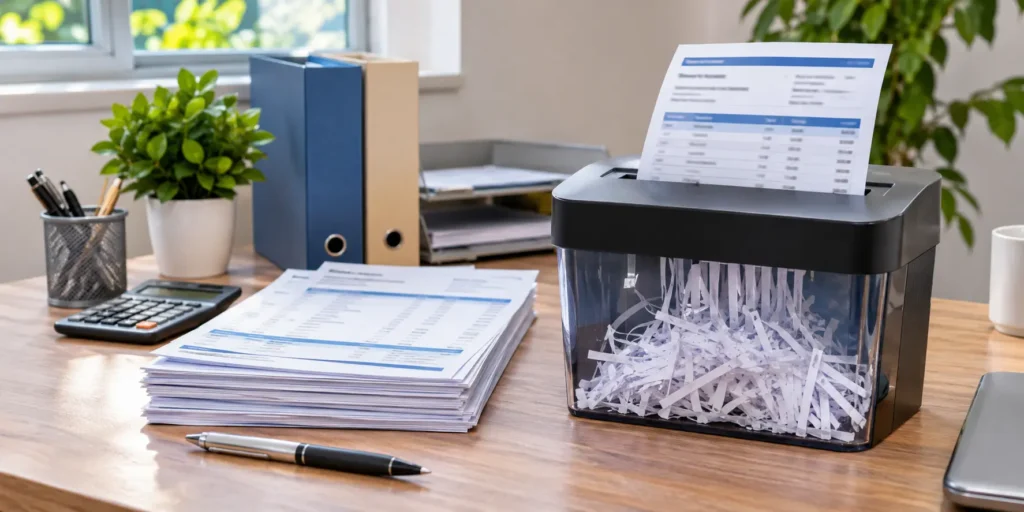
Bank statements often pile up in drawers, folders, and old files. Most people keep them without knowing when it’s safe to throw them away. So, how long to keep bank statements before you shred them? Keeping them too long can increase your risk of identity theft.
However, getting rid of them too soon may cause problems when you need payment records or tax documents. This guide covers the right retention periods, important exceptions, and safe ways to shred old bank statements.
How Long Should You Keep Bank Statements?
You should generally keep routine bank statements for about one year before shredding them. This gives you enough time to review transactions, spot errors, and check for unexpected charges. However, some statements need longer storage.
Keep bank statements related to tax deductions, business expenses, large purchases, or financial disputes for several years. The IRS recommends different record retention periods depending on your tax situation. Once you no longer need a statement, shred it safely instead of throwing it in the trash.
Bank Statement Retention Periods by Situation
Not every bank statement needs the same storage time. The right period depends on what the statement contains and why you might need it later. Here is a simple breakdown to help you decide when to keep or shred old bank statements.
| Situation | How Long to Keep |
|---|---|
| Routine monthly statements | About 1 year |
| Statements related to taxes | 3 to 7 years |
| Large purchases and insurance claims | Until the matter is fully settled |
| Bank disputes and payment issues | Until the dispute is resolved |
| Loans and mortgages | Until the loan is fully paid |
Routine Monthly Statements (About 1 Year)
For regular bank statements, keeping them for about one year is usually enough. This gives you time to review transactions, check account balances, and spot unexpected charges. After that, you can shred them if you no longer need the records.
Statements Tied to Taxes (3 to 7 Years)
Keep statements that support tax deductions, business expenses, and charitable donations for longer. Most tax records should stay for at least three years, but some situations require seven years. Read our guide on [how long to keep tax records] for more details.
Statements for Large Purchases or Disputes
Keep statements showing payments for expensive purchases, insurance claims, or major repairs. They can help prove when you paid and how much you spent. Hold onto them until warranties expire or disputes with sellers, banks, or insurance companies are settled.
Statements for Loans and Mortgages
Banks and lenders may ask for recent statements to verify your income, savings, and regular payments. Keep relevant statements while applying for a loan or mortgage. You should also retain important payment records until the loan is fully paid.
How to Shred Old Bank Statements Safely
Once your bank statements are no longer needed, don’t simply throw them in the trash. They contain personal and financial details that should stay private. Here are a few ways to dispose of them safely.
Why You Should Never Just Toss Them
Bank statements often show account numbers, home addresses, transaction details, and spending habits. Someone could misuse this information for identity theft or financial fraud. Even old statements can put your personal information at risk if they fall into the wrong hands.
Tips for Shredding at Home
A cross-cut or micro-cut shredder is a good choice for destroying old bank statements. Both cut paper into smaller pieces, making it harder to read or put back together. Shred a few sheets at a time to avoid paper jams. If you’re buying a home shredder, choose one that suits your regular paper volume.
Use Community Shredding Events and Services
If you have a large pile of old bank statements, community shredding events can make disposal easier. These events often let you destroy multiple boxes of documents at once. Professional shredding services are another option for larger collections.
Frequently Asked Questions
Is it OK to throw away old bank statements?
Yes, but don’t put them directly in the trash. Shred old bank statements first to protect your personal and financial information.
Should I keep bank statements for seven years?
Not always. Routine statements usually need about one year of storage, while tax-related records may require three to seven years.
How long should I keep canceled checks?
Keep canceled checks for at least one year if they relate to regular expenses. Hold onto checks supporting tax deductions or major purchases for longer.
How long should I keep a deceased person’s bank statements?
Keep them until the estate is fully settled and all tax matters are resolved. An executor may need these records to verify payments, debts, and financial transactions.