
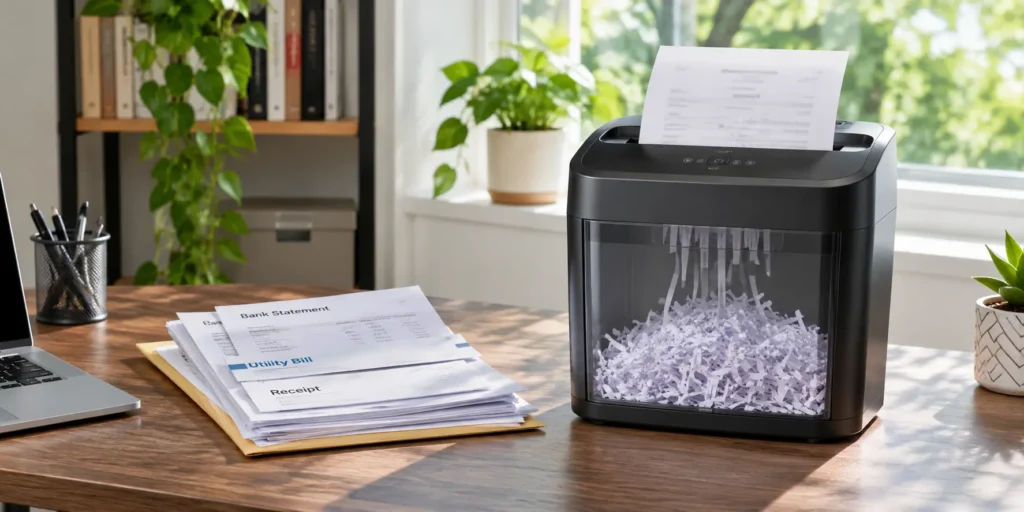
Bills, bank statements, tax papers, and old receipts can take up a lot of space at home. You probably don’t need all of them, but throwing them away isn’t always safe. A home paper shredder helps destroy these papers before they reach the trash. The problem is, there are so many models available that picking one can get confusing.
So, what should you look for? Let’s look at the cut types, sheet capacity, speed, and price to help you find the right one.
Why Use a Home Paper Shredder?
Throwing old papers straight into the trash may seem harmless, but some documents contain details that others can misuse. Someone could find your personal information and use it for identity theft or fraud. Bank statements, pay stubs, medical bills, and even junk mail with your name can reveal more than you think.
A home paper shredder makes it easier to destroy these papers before throwing them away. You don’t have to visit a shredding service every time you clean your desk. Also, before shredding old tax papers, check our guide on [how long to keep tax records] to know which documents you should save.
Choose the Right Cut Type
The first thing to check when buying a paper shredder is its cut type. It decides how small your documents become and how difficult they are to put back together. Most home paper shredders come in three types, and each offers a different level of security.
| Cut Type | Security Level | Best For |
|---|---|---|
| Strip-Cut | Low | General, non-sensitive papers |
| Cross-Cut | Medium to High | Everyday personal documents |
| Micro-Cut | High | Tax papers, bank records, and private documents |
Strip-Cut Shredders
Strip-cut shredders cut paper into long, thin strips. They are usually the cheapest option and work well for basic paper disposal. However, the strips are easier to put back together, so they offer the lowest security.
Cross-Cut Shredders
Cross-cut shredders cut paper in two directions, creating small pieces instead of long strips. They offer a good balance between price and security. For most homes, this is a practical choice for shredding bills, statements, and other personal papers.
Micro-Cut Shredders
Micro-cut shredders turn paper into tiny, confetti-like pieces. It becomes much harder to read or rebuild the original document. These models are a better choice for tax papers, bank records, and other highly private information.
Understanding Security Levels
Paper shredders use P-level ratings, ranging from P-1 to P-7. A higher number means smaller paper pieces and better security. For regular home use, P-4 or P-5 models are worth considering, depending on how sensitive your documents are.
Check Sheet Capacity and Shredding Speed
Sheet capacity and shredding speed matter when you have a lot of papers to clear. A shredder that handles only a few sheets can make the job take longer, especially during monthly cleanups. So, check these two things before buying.
How Many Sheets at a Time?
Most home shredders can handle around 6 to 12 sheets per pass. If you only shred a few bills or letters each week, a smaller capacity should be enough. But if you regularly clear old files, look for a model that handles more sheets at once.
Run Time and Cool-Down
Not every shredder can run continuously. Many home models need a break after a few minutes to prevent the motor from overheating. Check the run time and cool-down period before buying, especially if you plan to shred large piles of paper.
Look at Bin Size and Ease of Emptying
The shredder’s bin size is another thing worth checking. A small bin fills up quickly, especially if you shred papers regularly. This means you’ll have to stop your work and empty it more often, which can get annoying.
Look for a shredder with a pull-out bin, as it makes emptying much easier. Some models also come with a see-through window on the bin. It lets you check how much shredded paper has collected inside, so you know when it’s time to empty it.
Features That Make a Shredder Better
Apart from cut type and capacity, a few extra features can make a paper shredder easier to use. You may not need all of them, but some are worth having, especially if you use the machine regularly.
Jam Protection and Auto Reverse
Paper jams can slow things down and sometimes damage the motor. Look for a shredder with jam protection or an auto-reverse feature. It helps push stuck paper back out instead of forcing it through the blades.
Staples, Credit Cards, and Discs
Some shredders can handle stapled papers, credit cards, and CDs or DVDs. However, not every model supports these materials. Check the manufacturer’s specifications before putting anything other than paper into the machine.
Noise Level
Shredders can be quite noisy during use. If you live in a small apartment or work from home, a quieter model can make a big difference.
Safety Features
Safety is important, especially in homes with children. Some models stop automatically when hands get too close to the paper opening. A safety lock is also useful to prevent children from switching on the machine.
When a Home Shredder Is Not Enough
A home shredder works well for everyday papers, but clearing large piles can take a lot of time. Small machines aren’t designed to handle hundreds of documents in one go. If you’re cleaning out old files or years of paperwork, community shredding events or professional shredding services can be a better option. On our free paper shredding events 2026 page you can find a convenient way to dispose of old documents safely.
Frequently Asked Questions
Is a cross-cut or micro-cut shredder better for home use?
Both work well for home use. Cross-cut shredders suit everyday documents, while micro-cut models offer better security for sensitive papers.
How many sheets should a home shredder cut at once?
Most home shredders handle 6 to 12 sheets per pass. Choose a capacity based on how much paper you usually shred.
Can a home shredder cut credit cards?
Some home shredders can cut credit cards, but not all models support them. Check the manufacturer’s instructions before shredding cards.
How often should I oil my shredder?
It depends on how often you use it. As a general rule, oil the blades whenever the manufacturer recommends it or when shredding performance starts to drop.
Final Thoughts
Choosing a home paper shredder doesn’t have to be complicated. Focus on the cut type, sheet capacity, bin size, and features you’ll actually use. For most homes, a cross-cut or micro-cut model is a good choice. Once you find the right one, start clearing those old papers and keep your personal information safe.