
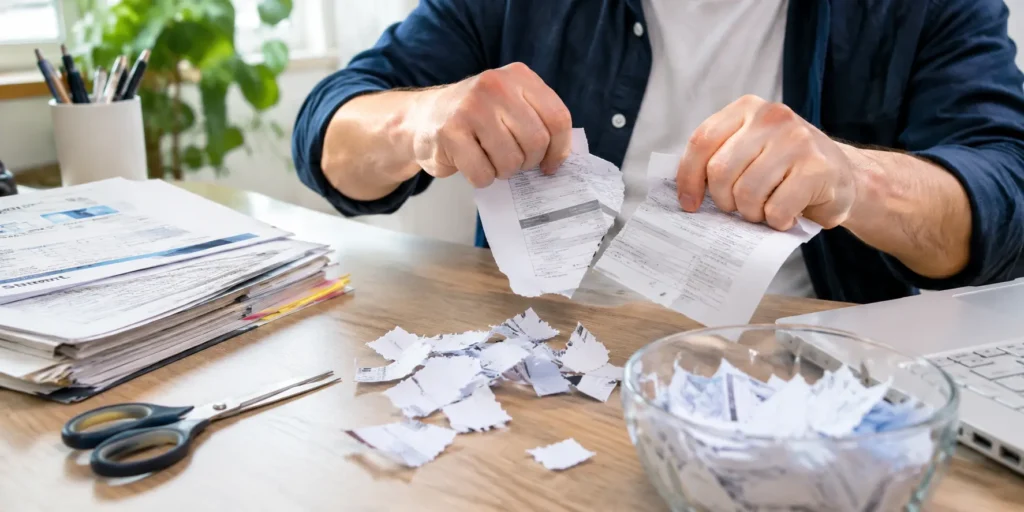
Got a pile of old bills, bank statements, or personal papers but no shredder at home? You probably don’t want to throw them straight into the trash either. Someone could easily find your personal details and misuse them.
The good news is, you don’t always need a paper shredder to get rid of these documents. There are several ways to shred paper without a shredder, using things you probably already have at home. Some take just a few minutes, while others offer better protection for sensitive papers.
Can You Destroy Documents Without a Shredder?
Yes, you can destroy documents without a shredder. You can tear pages by hand, cut them into small pieces, soak them in water, or take them to a professional shredding service.
The trick is to make the information difficult to read or put back together. Breaking papers into tiny pieces and mixing them with other waste adds another layer of protection. For documents containing bank details, tax information, or identity numbers, a professional shredding service is usually the better choice.
7 Ways to Shred Paper Without a Shredder
Not having a shredder doesn’t mean you have to throw sensitive papers away as they are. A few household items can help you break them down. Here are seven ways to get the job done, depending on how much paper you have and how much protection you need.
1. Tear Papers by Hand
This is probably the easiest option when you only have a few pages to destroy. Fold each sheet and tear it in half. Keep tearing the pieces until the printed text becomes difficult to read. Pay extra attention to names, account numbers, and addresses.
Pros: Free, quick, and requires no equipment.
Cons: Offers limited security and can be tiring when dealing with large piles.
2. Cut Papers With Scissors or a Paper Cutter
If tearing feels like too much work, grab a pair of scissors. Cut each page into small strips, then cut those strips across in the opposite direction. This helps break up names, numbers, and other printed details.
Pros: Gives you smaller pieces than basic hand tearing.
Cons: Takes considerable time when you have several documents.
3. Black Out Key Details First
Have a thick permanent marker or an ID guard roller stamp? Use it to cover names, addresses, account numbers, and other personal details. Make sure the ink completely hides the printed information. However, don’t rely on this method alone. Cut or tear the papers afterward for better protection.
Pros: Easy to do and useful for hiding personal information.
Cons: Markers may not completely hide printed details, especially when someone examines the paper closely.
4. Soak Paper in Water
Water can make paper much harder to handle and read. Tear the documents into smaller pieces and place them in a bucket of water. Leave them until the paper becomes soft and starts breaking apart. Stir the mixture occasionally, then drain the excess water.
Pros: Useful for destroying several pages together.
Cons: Takes time, creates a messy mixture, and ink may bleed onto nearby surfaces.
5. Blend Paper Into Pulp
For smaller quantities, you can turn paper into pulp using a blender. Tear the documents into small pieces and add them to a blender you no longer use for food. Add water and blend until the paper breaks down into a thick mixture. Dispose of the pulp in the trash or compost where suitable.
Pros: Makes printed information extremely difficult to recover.
Cons: Messy process, and you need a separate blender that won’t be used for food again.
6. Burn Paper (Only Where Legal and Safe)
Burning may seem like a quick solution, but it comes with serious risks. Many areas restrict or ban open burning. Paper can also produce smoke, while printed inks may release harmful fumes. Check local rules before considering this option. Never burn documents indoors or leave a fire unattended.
Pros: Can destroy documents completely when handled in a legally permitted, controlled setting.
Cons: Fire hazards, smoke, and harmful fumes make this a last resort.
7. Use a Shredding Service or Community Event
If you have boxes of old documents, handling everything yourself can become a tiring job. Professional shredding services use industrial equipment to destroy large quantities quickly. Some communities also organize free paper shredding events where residents can bring their unwanted documents.
Pros: Offers reliable destruction with minimal effort, especially for sensitive records.
Cons: Some services charge based on weight or box quantity, and events may have limited dates.
Looking for a free option? Check upcoming paper shredding events in your area before paying for a service.
Which Method Is Best for You?
The right method depends on how many documents you have and what information they contain. Hand tearing works for everyday papers, while soaking or professional shredding offers better protection for sensitive records.
| Method | Security Level | Effort | Best For |
|---|---|---|---|
| Hand tearing | Low | Low | A few ordinary papers |
| Scissors or paper cutter | Medium | Medium | Small document piles |
| Blacking out details | Low | Low | Hiding visible personal details |
| Soaking in water | Medium | Medium | Small to medium piles |
| Blending into pulp | High | High | Sensitive documents |
| Burning | High | High | Legally permitted situations |
| Shredding service | Very High | Low | Large piles and confidential records |
If you’re clearing out old junk mail or papers without personal details, hand tearing or cutting should be enough. For bank statements, tax records, and documents containing identity information, choose a more secure option.
Keep in mind that security also depends on how completely the information becomes unreadable. You can learn more about different paper shredder security levels before deciding how much protection your documents need.
When to Buy a Shredder or Pay for a Service
Hand methods work fine when you only have a few pages to destroy. But if you regularly deal with old bills, bank statements, or office paperwork, tearing and cutting can quickly become frustrating.
In that case, it may be time to buy a shredder. A home shredder saves time and makes document disposal easier whenever you need it.
If you have several boxes of confidential papers to clear out, it may make more sense to pay for a service. Professional shredding is often a more practical choice for large document piles.
Final Thoughts
Getting rid of old paperwork doesn’t have to be complicated. Sort your documents by risk, break them into small pieces, and avoid throwing everything into one bag. For highly sensitive records, choose a more secure option. If you have too much paper to handle yourself, look for a local shredding event or professional service.
Frequently Asked Questions
Is tearing paper by hand enough to destroy documents?
Hand tearing works for papers without sensitive information. For bank statements or documents with personal details, tear them into much smaller pieces and mix them with other waste.
Can I shred paper in a blender?
Yes, you can blend torn paper with water to create pulp. Use an old blender that will never be used for food again.
Is it legal to burn old documents at home?
It depends on your local rules. Many areas restrict open burning due to fire hazards and air pollution, so check local regulations first.
Where can I shred paper for free?
Look for community shredding events, local recycling drives, or special document destruction programs. Some organizations offer free shredding days for residents.